
Working with the Fierce Urgency of Now

How World Central Kitchen’s model is different and has grown along the way
As the war in Ukraine enters a new phase, with a long-expected counter-offensive against Russian forces who have waged an unrelenting and murderous onslaught since last February, this is an important time to take stock of the last 15 months.
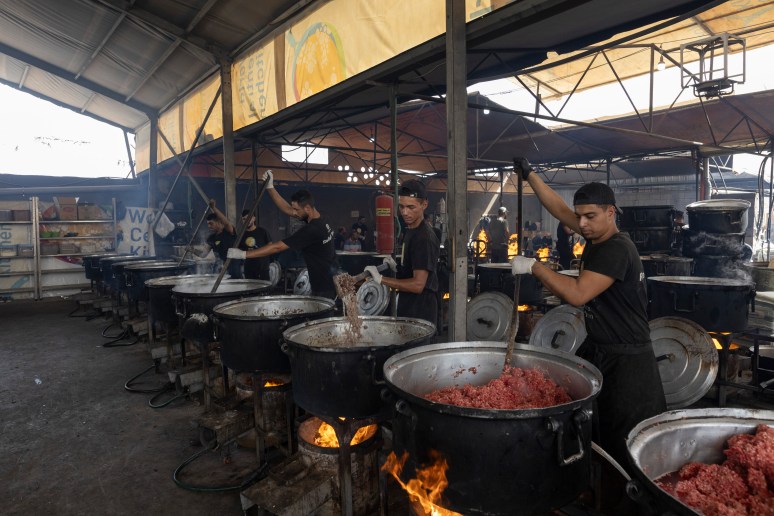
World Central Kitchen immediately responded to Russia’s invasion and to the fear, hunger, and displacement that it created throughout Ukrainian communities. Within hours we were feeding refugees on the Polish border, rapidly scaling our operations when others did not, or simply could not, show up given the massive challenges created by the mayhem of war.
It was our first emergency response in an active war zone, and the scale of the need – as well as the daily challenges – was enormous.
We ultimately opened more than 4,000 distribution sites, working with hundreds of restaurants, over 1,000 contractors and thousands more volunteers across Ukraine and the bordering countries, where so many refugees sought safety. We worked alongside countless people who gave everything they had to save their neighbors and we were inspired every day by the bravery we saw in the midst of such horror.
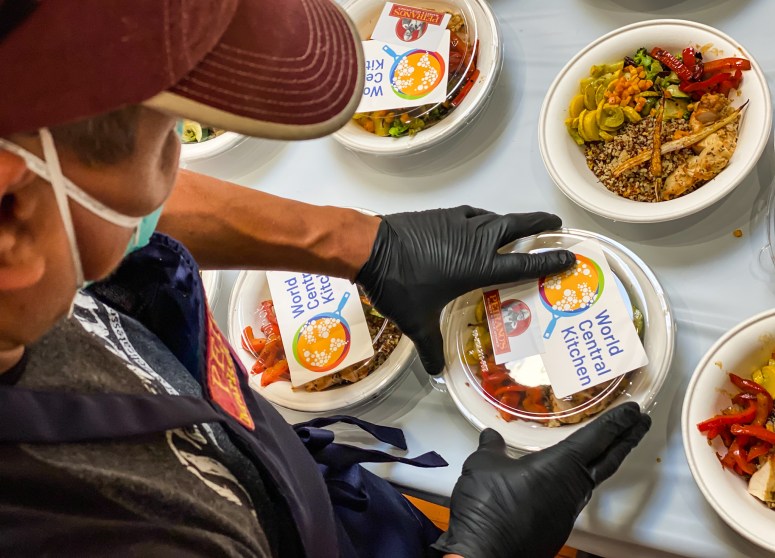
Numbers alone cannot possibly tell the full story. At World Central Kitchen we call ourselves “food fighters” because our fight is to feed people well and quickly in the times of greatest adversity. That also means adapting to different challenges. In that spirit, to continue to improve how we and others operate after large-scale disasters, we want to share with our community of followers and supporters some of the lessons learned to date and the progress we have made.
First, war zones and disaster areas are chaotic, challenging places to scale up quickly and maintain massive operations. Reliable information is hard to find, and we needed to adapt our model rapidly to identify a large network of local suppliers and restaurants on the fly, in a country at war.
As an NGO with a singular mission, we are focused on working with the fierce urgency of now because when people are hungry, they need food today – not tomorrow, or when the paperwork is reviewed and approved. This means we also must accept the additional risks associated with our work—and mitigate against them—in order to accomplish our very mission.
The speed at which we mobilize and leverage community resources is what allowed us to be the first into newly liberated Bucha and Kherson, following months of Russian occupation, and to provide meals within hours of the Kakhovka Dam breaking.
Our model is rare: we rely on partners on the ground, and spend money as locally as the situation allows because every dollar we spend locally has a multiplier effect. Their workers get paid and buy locally, standing up the local food economy by partnering with restaurants, caterers, wholesalers and farmers who would otherwise struggle to survive.
WCK takes fraud and waste very seriously. Every dollar wasted is a dollar less to spend on food and helping people in need. However, as an organization that was spending $2 million a day in and around Ukraine, we unfortunately learned of suspected instances of fraud.
We have been constantly evolving processes to monitor our meal quality and quantity standards of our suppliers and last summer took steps to increase these efforts. We also turned to a well-respected law firm to investigate relevant activities in Ukraine.
In the process, the law firm was able to confirm instances of fraud that amounted to several million dollars, which is unacceptable, but still represents a tiny percentage of the $432 million we spent feeding people impacted by war.
Fraud is an obstacle that global relief organizations have grappled with for years. It is perhaps unsurprising that you can find bad actors in communities struggling with the effects of war and disasters.
Our goal has always been to keep our overheads low, and in the past, we were overly reliant on community reporting to discover bad actors within our networks. In hindsight, we could have invested more in our internal operations to manage huge regional disasters such as the invasion of Ukraine and the earthquakes in Türkiye.
In response to issues identified as part of the law firm’s investigation, as well as by our audit teams in Ukraine and Türkiye, we made necessary changes among our personnel and our partners in both activations. We have also implemented additional safeguards to combat fraud, including an anonymous tip line and improvements to our partner monitoring systems such as a separate control team that supervises the invoicing and delivery of meals in Ukraine.
Last year, together, we served more meals than in all our previous years combined. That growth has shown us how we can leverage our resources more effectively. With the full support of our Board of Directors, including WCK’s founder and Chief Feeding Officer, José Andrés, we are investing in adding new and experienced leaders as we focus on improving our internal systems— including increasing our compliance programs to ensure all responses have the necessary level of operational controls and oversight without slowing or hindering the WCK mission.
We are a maturing organization that is committed to evolving and growing, but our mission is unchanged. We will always give people respect, not pity, and rely on the people we work with because we have found – far more often than not – that in the worst of situations, you find the best of humanity.
We like to quote John Steinbeck’s epic character Tom Joad, speaking in the depths of the great depression in The Grapes of Wrath: “Wherever there’s a fight, so hungry people can eat, I’ll be there.”
This past year has been unlike any other year in our history, and we thank you for making that possible. We also thank you for trusting us to evolve, grow, and discover ways to keep pushing the envelope in ways other organizations can’t or won’t so we can feed people in their darkest moments. The fight for hungry people to eat has never been clean or simple. But it’s our fight. And with the steadfast commitment by our teams and countless generous supporters, we will always be there, no matter how hard the situation seems.
Rob Wilder is the Chairman and Co-Founder and Erin Gore was named the new CEO of World Central Kitchen in March 2023.