One year later: Hurricane Dorian in The Bahamas

When Hurricane Dorian made landfall in The Bahamas in September 2019, no one could have predicted the damage it would cause. The Category 5 hurricane was one of the most powerful on record in the Atlantic with sustained winds reaching a peak of 185 mph. Before Hurricane Dorian hit, WCK’s Relief Team set up in the kitchen of the Atlantis Hotel in Nassau, the capital of The Bahamas and about 80 miles south of the Abaco Islands where the storm first came ashore.
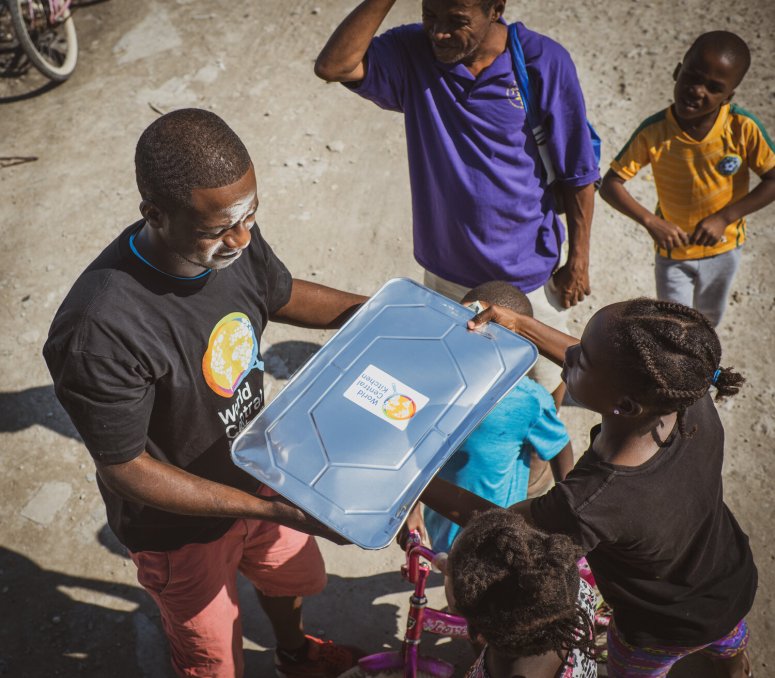
Hurricane Dorian moved incredibly slowly—the storm stalled over Grand Bahama (just east of the Abacos) for a full 24 hours. As soon as the storm passed, WCK’s Relief Team got to the northern islands. We found that entire neighborhoods had been destroyed; the situation was dire. In the days that followed, our team prepared fresh meals from the kitchen in Nassau and brought them by helicopter to the Abacos. From there, we delivered throughout the islands using boats, seaplanes, and whatever means necessary to reach the islands and cays that were cut off from support. On Grand Bahama, we brought in a 220-foot supply ship to begin cooking hot meals onsite for families who had lost everything.


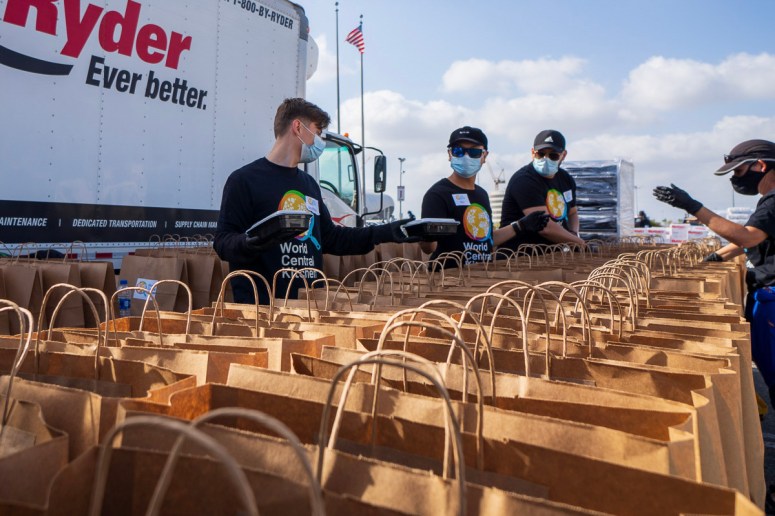
Our team ended up cooking in The Bahamas for months, serving more than 3 million meals across 250 distribution sites to communities on the Abacos and Grand Bahama as well as to evacuees staying in Nassau. As emergency response turned into recovery, WCK’s Resilience Programs team stepped in to discover the ways we could continue to support the food economy in The Bahamas, and we have now made a long-term commitment to the islands through our Plow to Plate grant program. Through this Resilience Network, WCK supports farmers, fishers, and small food-related businesses of Abaco with direct grants to help them rebuild their operations and get back to their pre-Dorian production levels—and hopefully one day, even surpass them.

In our initial round of building WCK’s Resilience Network in Abaco, we are partnering with 12 food businesses and have awarded more than $175,000 in support. Here are a few of the fishers and farmers who’ve become part of our network.

Glen and Tracy live on and run Driftwood Food Company, an entirely off-grid 25-acre farm where they produce leafy greens, sweet peppers, tomatoes, beans, cauliflower, broccoli, cucumbers, eggplant, and herbs. They also have a small-scale egg operation with 20 hens who produce organic cage-free eggs, as well as a two-acre guava and coconut orchard. As an avid lover of the outdoors, living sustainably and teaching others how to grow food, Glen works part time as a marina manager at a local resort. Tracy tends full time to harvesting and selling at the farm and managing their household.
With WCK’s support, Glen and Tracy will expand their existing chicken operation to incorporate mobile chicken coops or “chicken tractors” to house egg-laying chickens. The mobile coops will protect the chickens from predators while also providing a cool, sheltered habitat that can be moved throughout the guava and coconut orchards, adding fertilization and pest control as well.
Currently unable to keep up with the existing demand for their organic eggs at local farmers markets, they intend to increase production fivefold and ultimately offer eggs in their weekly CSA boxes to customers as well as through direct sales. With an expected production of 33,600 eggs annually, gross yearly sales are expected to be in the range of $14,000, allowing additional revenue to cover a full-time farm worker.

Vashti remembers from the age of six learning how to farm alongside her grandparents, who taught her the fundamentals of growing and preserving all sorts of fruits and vegetables, as well as how to raise animals. This experience stuck with her as she grew up and became a certified teacher for early learners –now she’s the one who teaches primary school students about farming, animal care, and production on her leased property, Sunflower Farms.
This diversified farm started in 2007 and produces fresh vegetables, eggs, and meat but also education and recreational tours, and seedlings to help her students start community gardens. As a lifelong learner, Vashti furthers her education by watching videos on Youtube, accessing online resources, and by “sitting at the elders’ feet.”
With WCK’s support, Vashti will purchase a tractor in order to prepare and clear new plots of land on the farm more quickly and without the need of external resources.


Anderson Davis says that “fishing has always been in my bones,” as he grew up in Moore’s Island, which is known for its fishing community. He always wanted to be a fisher but decided to first serve his country for seven years before returning to his first love. Anderson has been a self-employed fisherman for more than thirty years, becoming a Class B boat captain and operating both large and small vessels.
His fishing day usually starts at 6:00am, when he and his partner go out in his 17-foot boat to catch fish, conch, lobster, and stone crabs, depending on what wholesalers have requested or what is in season. From August to March, they are able to deep-sea dive for lobsters. When the lobster season closes they fish for conch, which they can catch all year round. All of the fish and shellfish are sold to wholesalers on Moore’s Island and then shipped to Nassau.
Since Dorian, his daily routine has been severely affected; with WCK’s support he will purchase a new engine and get back to his normal fishing operation. The engine will give him an opportunity to supply larger wholesalers who request a bigger catch. He is looking to employ at least one worker and increase his production by 25% during the first year.


Husband and wife team Nick and Daphne are self-taught farmers who have been active in agriculture for over 25 years. They run Abaco Neem, the only certified organic farm in The Bahamas; more than 120 acres of their 214-acre farm are in production. They produce a variety of health, body, pet, and agricultural goods that are sold in stores in Abaco and throughout seven other Bahamian islands. Their farm specializes in neem trees – whose fruits and seeds are used to make soaps and balms – as well as over 100 varieties of Caribbean fruits and flowering trees such as coconuts, bananas, citrus, breadfruit, soursop, plums, cherries, and grapes.
Growing conditions for traditional crops in The Bahamas are especially challenging due to the thin layer of topsoil covering the limestone bedrock. In order to improve the quality of that topsoil, Abaco Neem will construct a compost station to produce all-natural, organic, neem-enriched compost that will ensure the quality of their food products and preserve their organic status. By creating their own organic inputs, Abaco Neem also hopes to encourage more farmers to realize the benefits of growing organically for both better quality food and to preserve the precious water table.

One year after Hurricane Dorian devastated The Bahamas, the strength and resilience of the Bahamian people continues to inspire WCK’s team. We are proud to be able to continue working side by side within the community to build a more food-secure future for the islands. To keep up with our long-term Resilience Programs, please follow WCK on Twitter and Instagram.