Innovation drives WCK’s work in Gaza

World Central Kitchen teams in the Middle East are continually innovating to meet the needs of families impacted by conflict. From developing our own stoves to forging new partnerships, we are overcoming limitations imposed by restrictions on humanitarian aid and expanding our operation to reach as many people as possible. In the three months since mobilizing across the region, our teams, working alongside trusted partners, have provided more than 16 million meals in the form of food kits and warm meals.
Innovation in Gaza
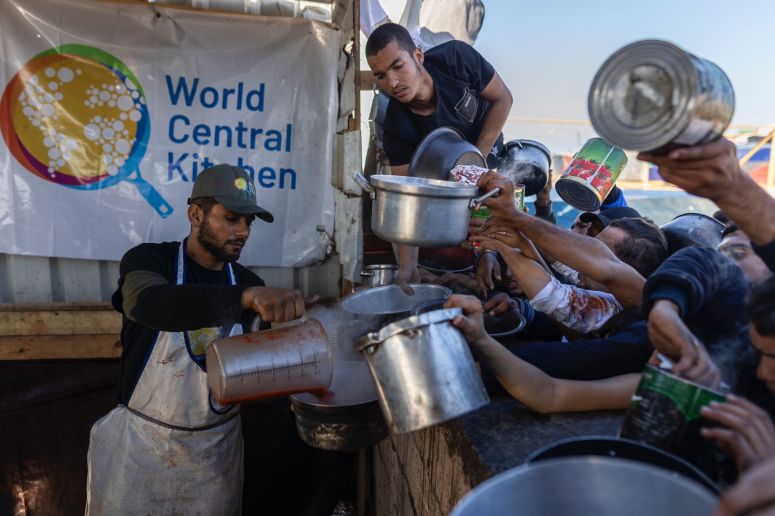
Our work in Gaza is centered around our Field Kitchen in the city of Rafah. Hundreds of thousands of Palestinians have fled to this southernmost city in search of safety and are sheltering in makeshift camps. Mass displacement of families as a result of relentless bombardment have led to shortages of basic necessities—clean water and food have dwindled to the point that experts warn of possible famine.
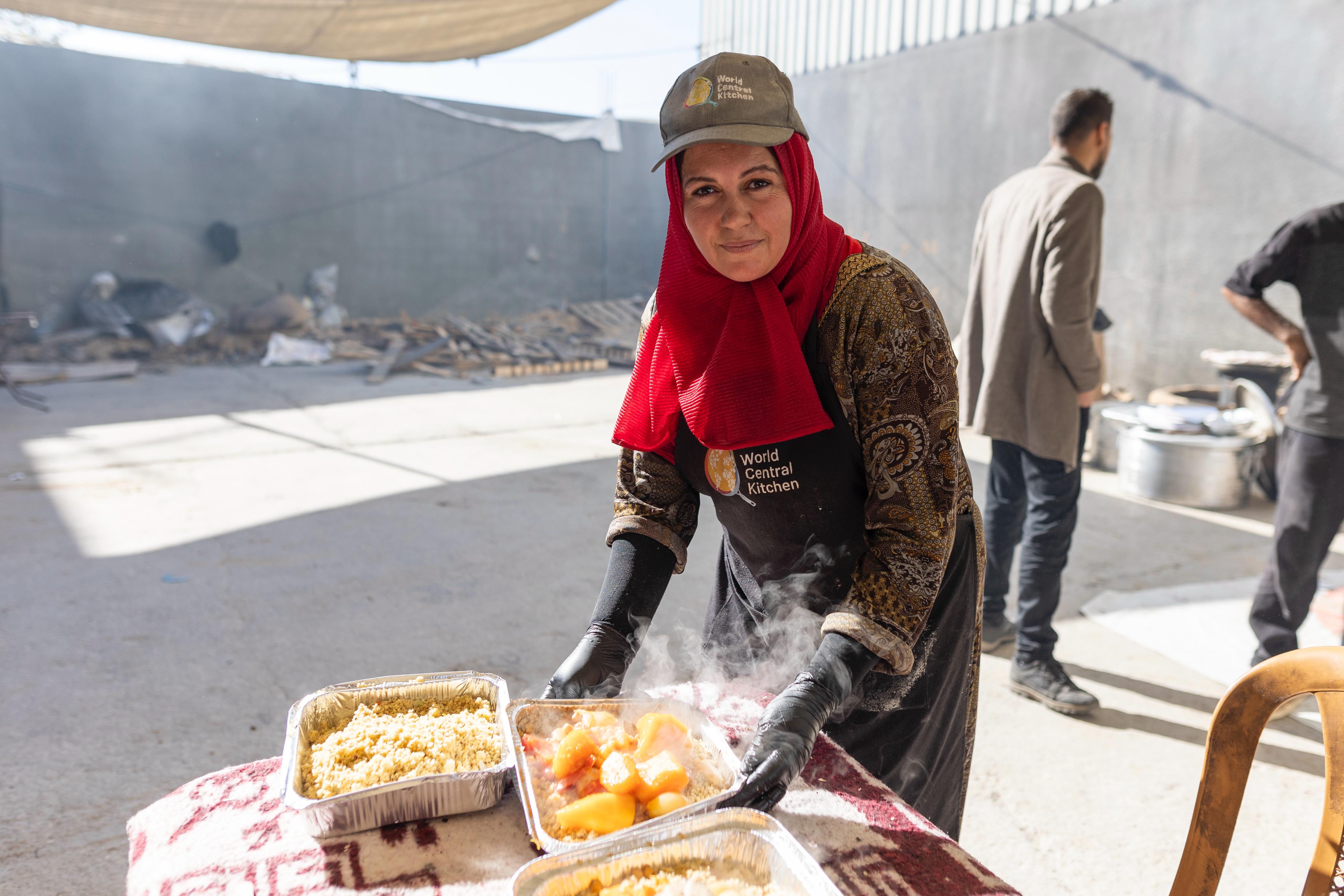
Um Hassan is one of the displaced Palestinians who was forced to leave behind her home. After fleeing to Rafah in search of safety, she was still unable to find food to feed her family, further adding stress to their situation. Since WCK’s arrival, Um Hassan and her family have received hot meals and meal kits from our team. These meals have offered a moment of comfort in the midst of chaos and disruption, and the kits have enabled Um Hassan to begin cooking for her family once again.

Um Hassan smiles as she cooks for her family with WCK-provided food.
A major challenge Palestinians are facing is lack of cooking fuel—and this was also a big hurdle our teams had to overcome to begin cooking at scale to meet food needs. WCK worked quickly on a solution: a new design for stoves that use wood pellets as fuel and fans to stoke the flames. Our teams connected with local manufacturers in Egypt to produce the stoves that were then transported into Gaza along with food supplies and other kitchen equipment. These stoves are now being used by Palestinian volunteers and chefs in our Rafah Field Kitchen to cook thousands of hot meals each day.

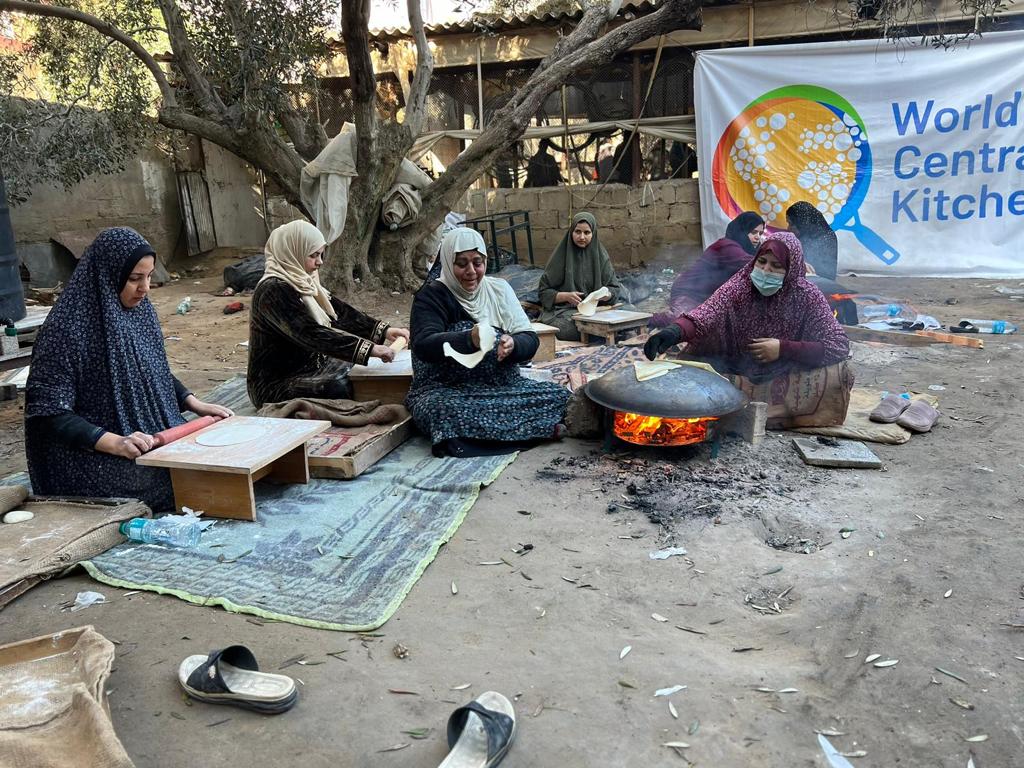
Getting aid into Gaza has been a complex logistical challenge, but the WCK team in Egypt has been undeterred. They have created a system that maximizes the efficiency and usefulness of each truck we dispatch to Gaza—up to 20 WCK aid trucks cross into the territory each day. “We have dedicated trucks that are designed and compiled in a way to set up a fully operational kitchen and start cooking for 1,845 people per day,” explained Nelly, one of WCK’s logistics staff in Egypt. This community kitchen truck includes WCK’s newly designed stoves, as well as cooking equipment and food, so local teams who receive these trucks have everything they need to begin feeding families in their area.
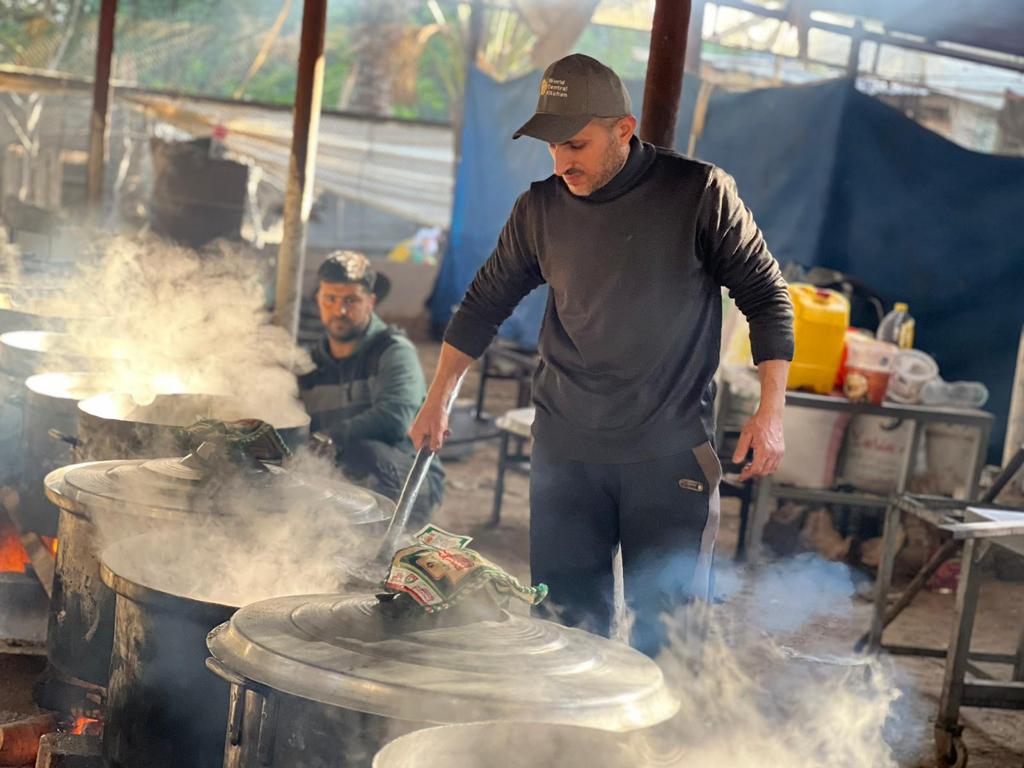
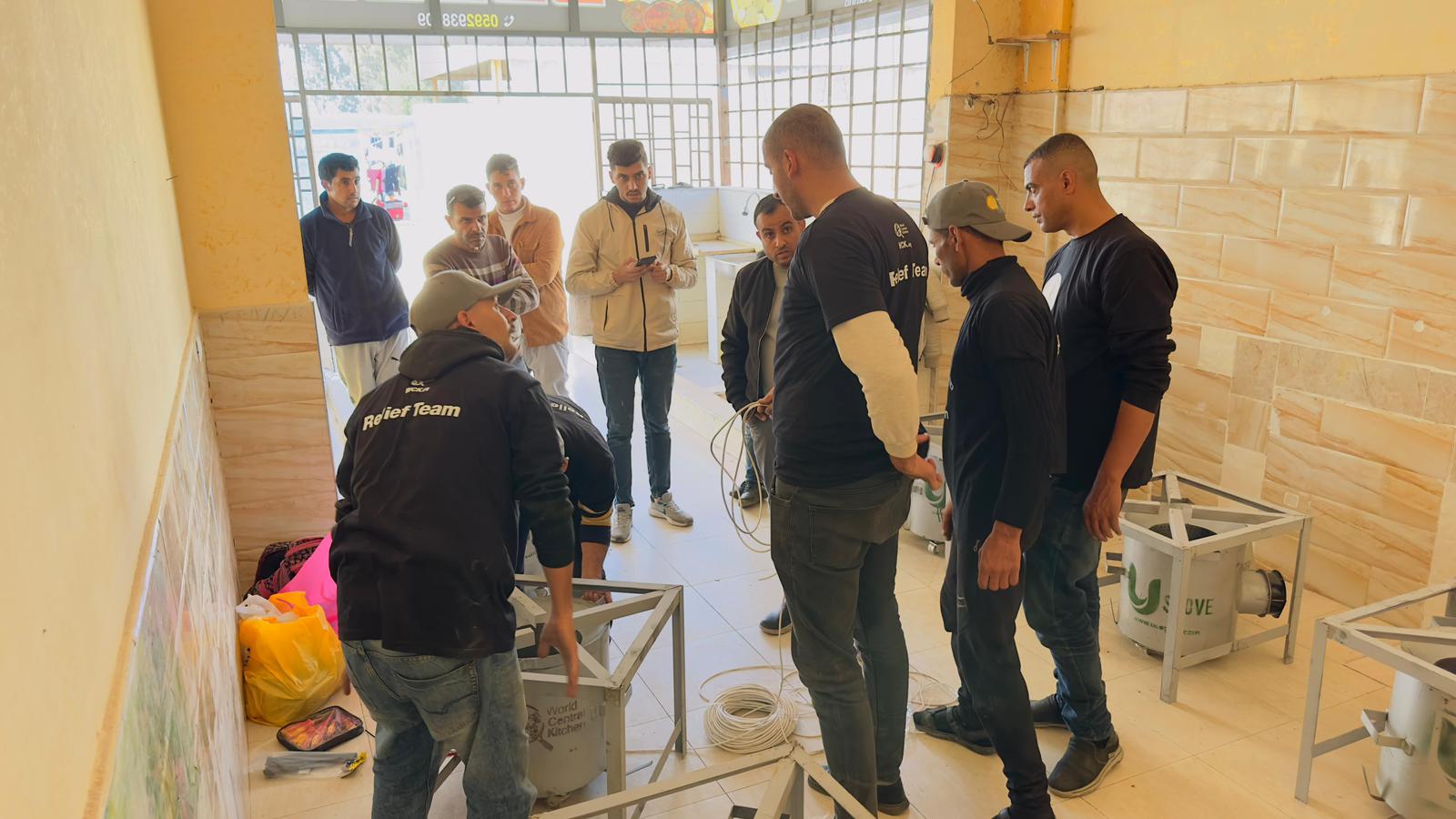
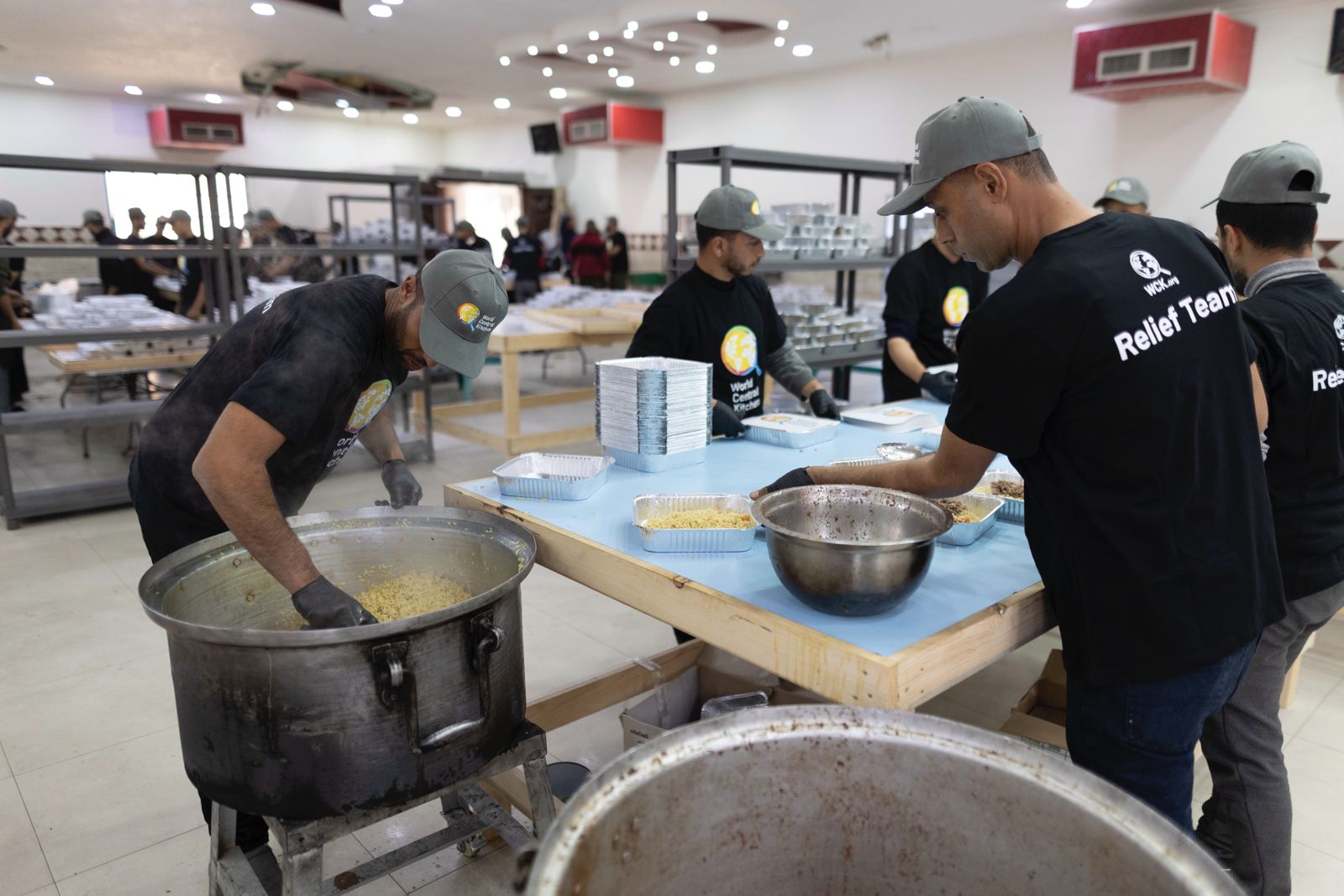
WCK’s stoves in use and being set up in a new community kitchen.
WCK has trained volunteers to help get the community kitchens operational as quickly as possible. Nine of these kitchens are up and running with seven more soon to cook their first meals. “The team is training the warehouse managers on how to report back on inventory levels and restocking needs so the supply chain team can better prepare,” said Fiona, WCK’s Director of Relief Operations. With a 2-3 week wait between when WCK trucks ship from Egypt and cross into Gaza to reach their destination, our teams need to know as quickly as possible what supplies are needed. As more of these trucks are able to enter Gaza, more Palestinians are able to have access to hot meals on a daily basis.
Meeting needs in Israel
Our efforts in Israel in recent weeks focused on meeting the needs of communities impacted by rocket attacks and of people like seniors unable to leave their homes or cook for themselves. Our local partners are providing support in the form of thousands of hot meals and meal kits. We are also providing hundreds of produce boxes for people able to cook.
To ensure we are reaching communities in need and not duplicating the efforts of local organizations, our Community Outreach Team is closely monitoring the impacted region. Our teams there are seeing emergency food needs decrease as markets and other businesses are reopening and families have access to food and the ability to cook for themselves. At the same time, local organizations are more active across the country and able to provide support to communities at risk of rocket attacks. As a result, we will wind down our efforts in Israel and expect to serve our last meals there in the coming days.


“WCK has played a pivotal role over the past three months to meet emergency food needs, and the people of Israel have been extraordinarily grateful,” said Fiona. Still, through the network of restaurants and local partners we built since first arriving, we are ready to scale our response in the country if the need arises once more.
Continued work in Lebanon
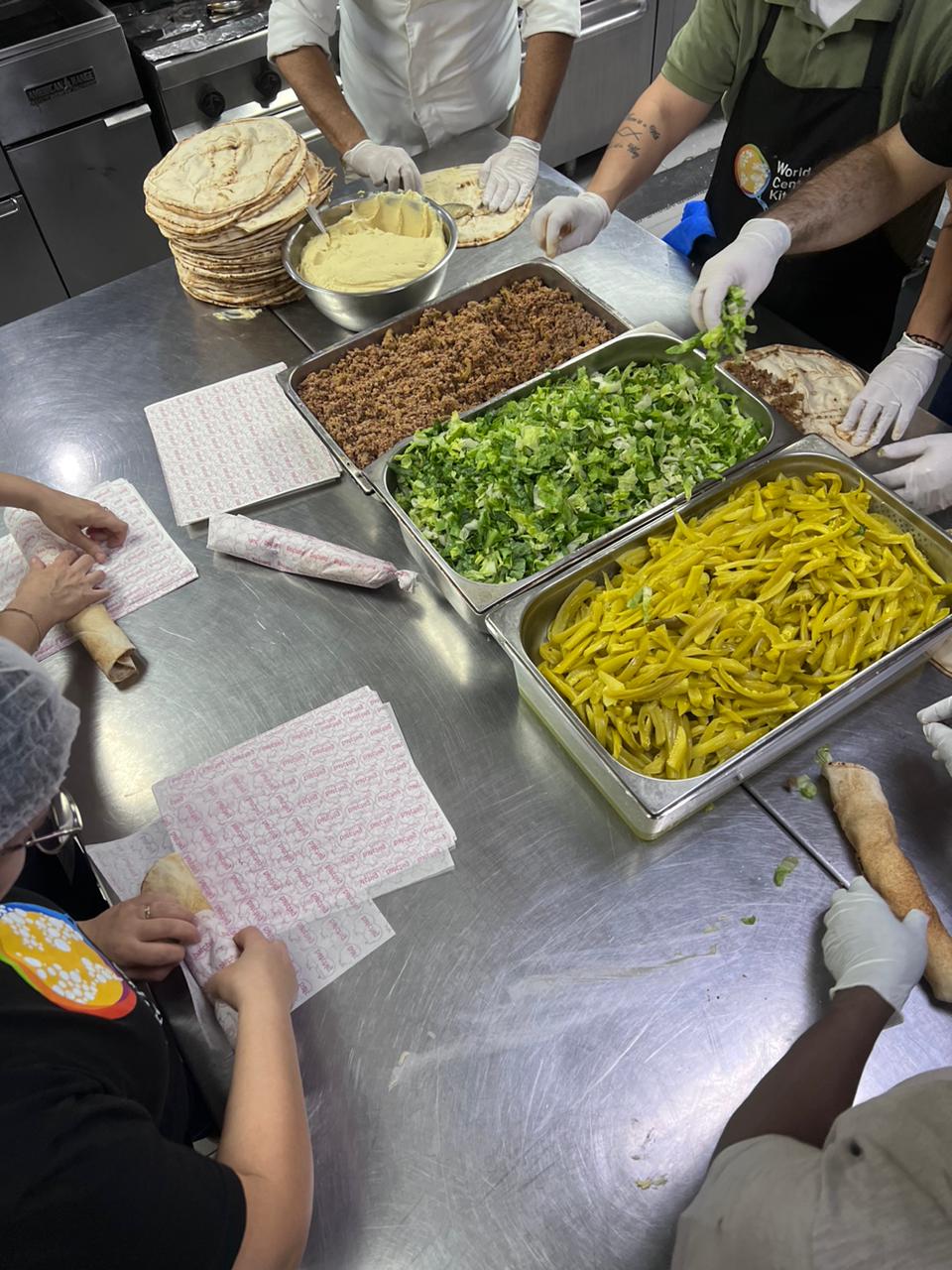
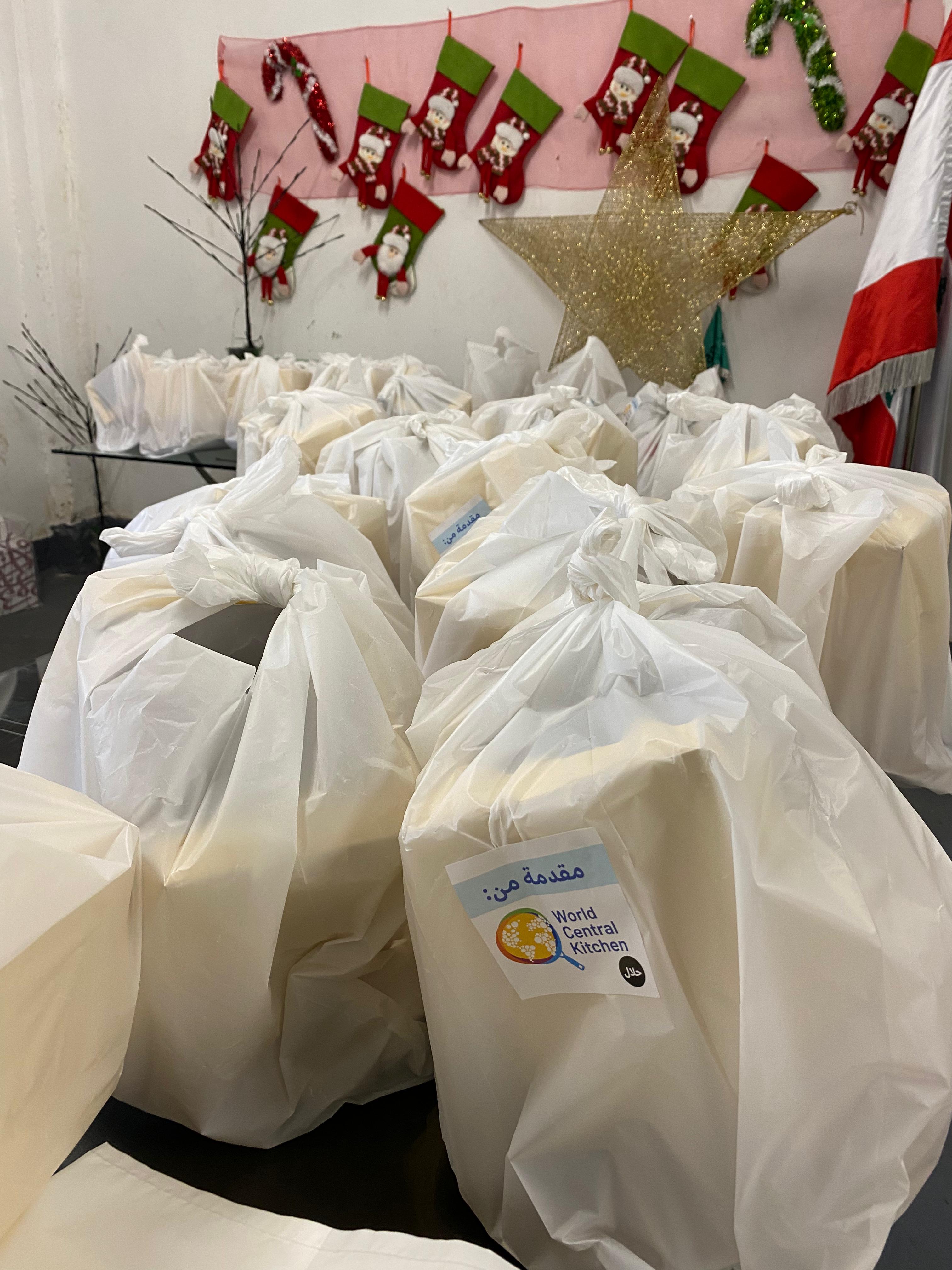
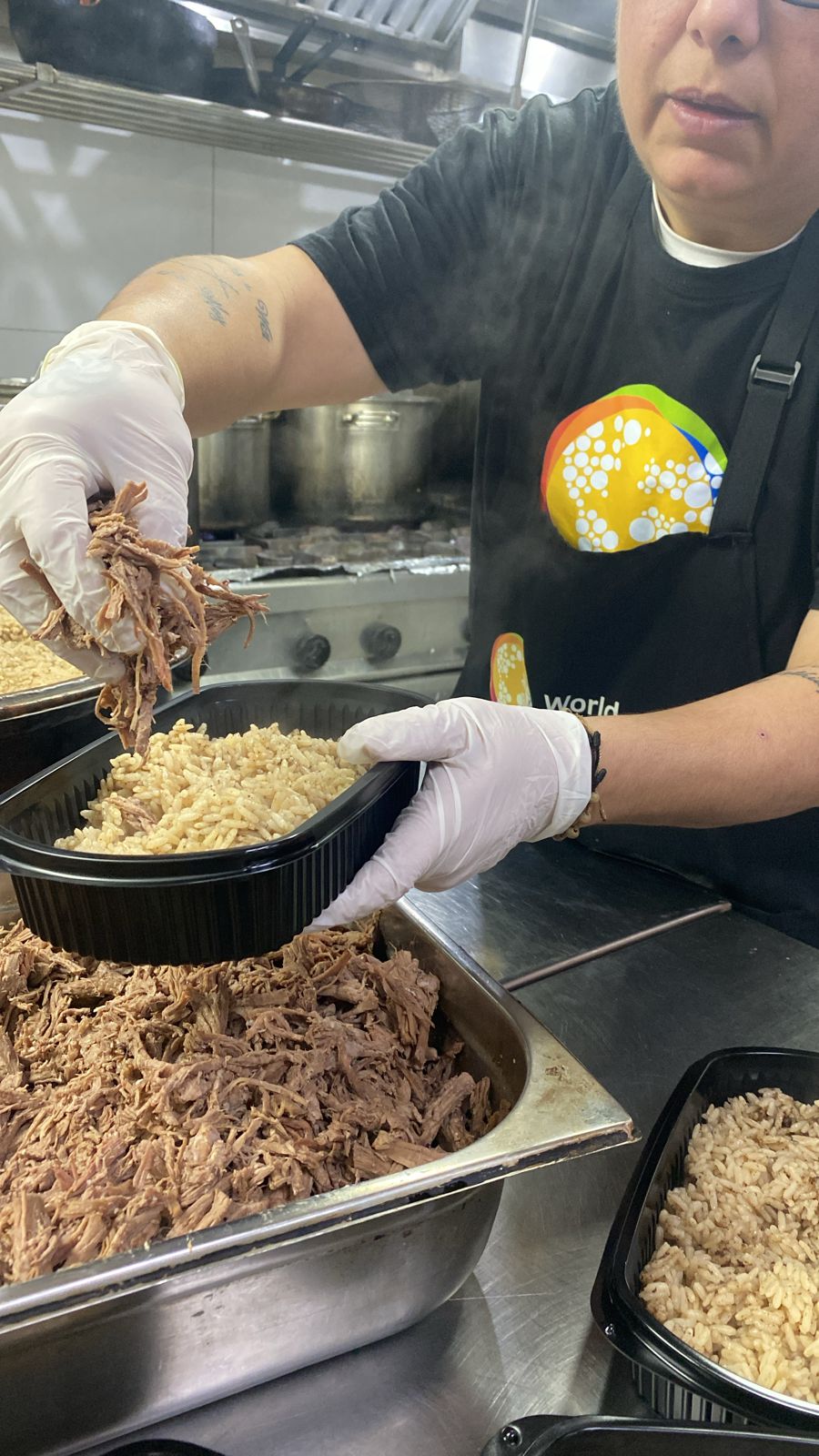
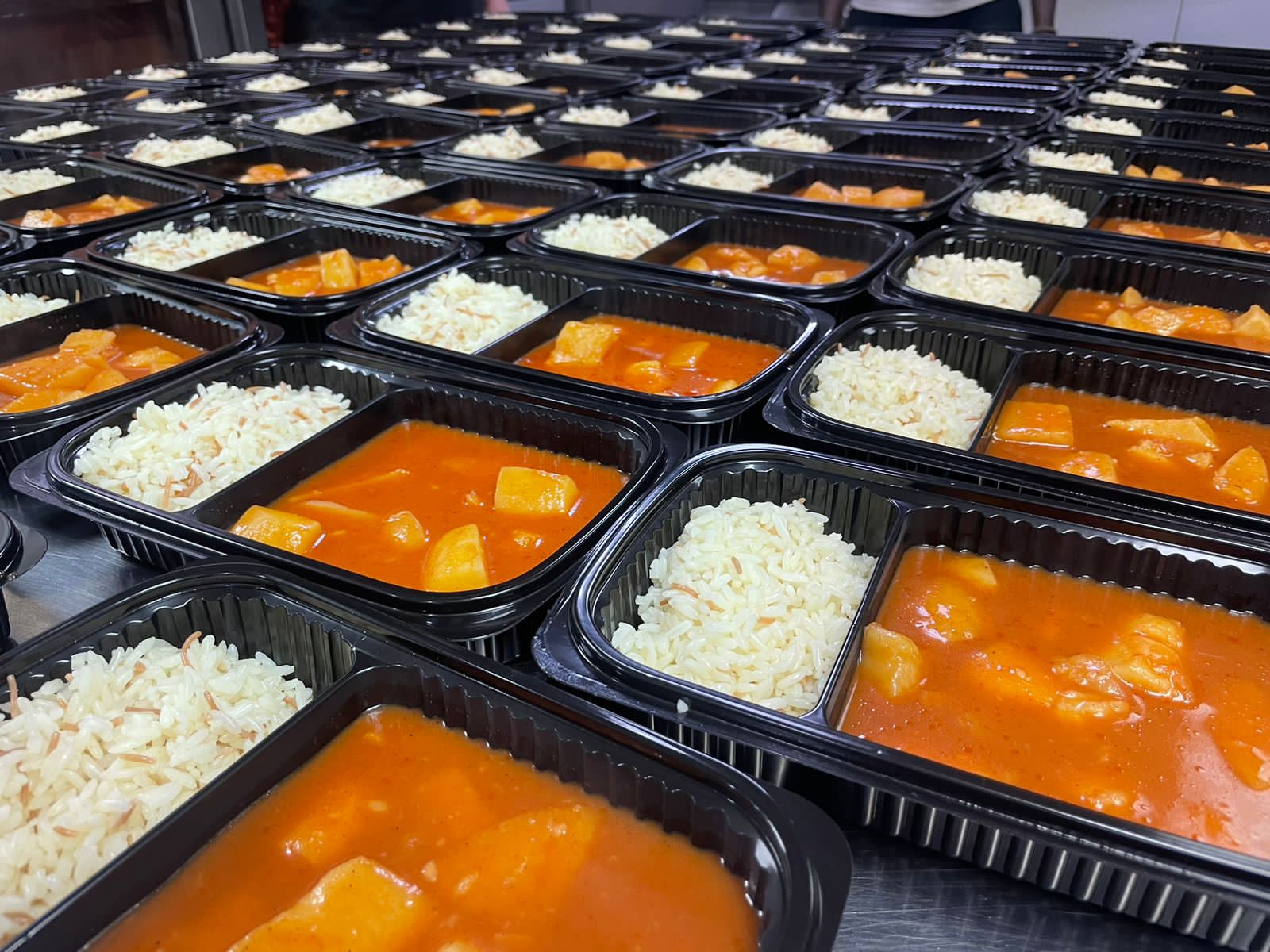
Bombing continues on the Israel-Lebanon border and is expected to intensify amid fears that conflict will expand further across the region. Despite high levels of displacement among Lebanese communities near the border, there is no official aid being provided by local authorities. As a result, WCK and our partners, along with other NGOs and volunteer groups, are working tirelessly to provide thousands of meals daily to families forced to flee their homes. We are doing this as we always do, providing nourishing, culturally appropriate meals that share comfort and hope.

Looking Ahead
WCK is continuing to innovate, working towards higher efficiency and maximizing the use of everything we are distributing. Our teams are working on a design for a new ready-to-eat meal kit that will have revised ingredients and enough food to feed a family for four days at a time. The design includes more conscientious packaging—the kits are packed into reusable canvas totes that families can use again and again. Our teams are also connecting with vendors in Egypt to get canned chicken and canned eggs so WCK can deliver more shelf-stable animal protein in the coming weeks. Though we hope there will be a humanitarian solution before then, our culinary team has finalized the ingredients for special boxes that will be ready for the start of Ramadan in March.
Learn more about our Middle East response here. For real-time updates, follow WCK on Twitter, Instagram, and Facebook.
Help us keep cooking for families in need.