Evolving Needs, Evolving Systems: How WCK Has Grown, According to Olga
In the first months of the Russian invasion of Ukraine, displacement unfolded rapidly and across multiple regions at once. Infrastructure damage disrupted supply chains and limited cooking capacity in affected cities. Under those conditions, WCK’s work scaling hot meal production was the most effective way to stabilize communities. The priority was straightforward: cook at volume and move food quickly to where people were gathering.
On March 6, 2022, Olga began working at WCK’s warehouse in Lviv. Before joining the mission, she had spent more than fifteen years in the film industry, overseeing productions that required coordination across large teams and tight timelines. That experience translated directly into the early days of warehouse operations.
“In film, you build systems that allow many moving parts to function together,” she explains. “When I arrived at the warehouse, trucks were coming in constantly and supplies had to leave just as quickly. The pressure was high, but the principle was familiar. Without structure, the work stops.”
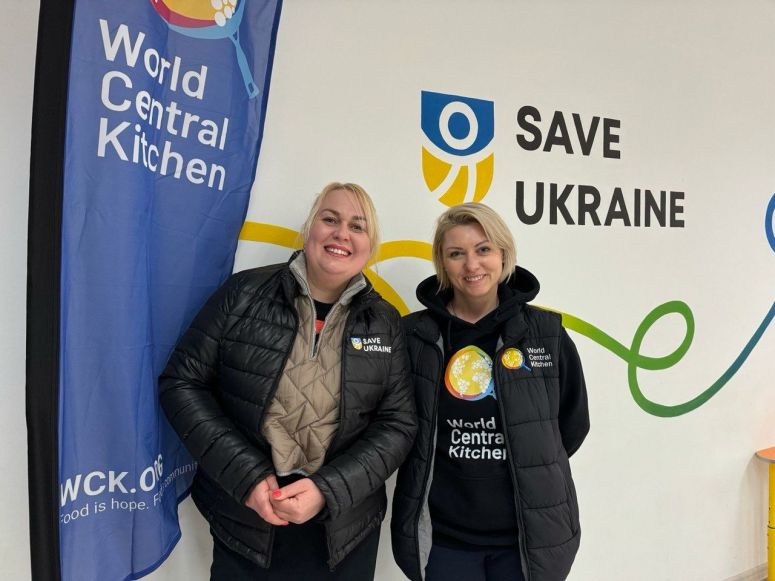
What initially functioned as emergency warehouse coordination expanded into a national operation. After leading warehouse operations, Olga became Country Lead in 2023. By that time, the operational environment had already shifted.
Over time, monitoring and regional coordination became more integrated into operational decision-making. Distribution planning increasingly relied on verified field assessments and direct regional presence, which allowed teams to adjust as conditions evolved. Because regional teams are embedded across the country, activation following a strike no longer requires building a response from scratch.
More than 295 million meals later, the work is still defined by emergency response.
“We are still responding to emergencies every week,” Olga says. “What has changed is that we now combine speed with a clearer understanding of where support is most needed and how to position ourselves in advance.”

Alongside emergency feeding, the mission expanded its operational formats in response to the range of needs emerging across different regions. Building on the foundation established through Food KIts and Vegetable Kits, which created a consistent baseline of food support for households, Community Kitchens, Laying Hens, Children’s Kits, Seeds of Hope, Community Fields, and Baby Kits were introduced as complementary components of the same system. Emergency meals continue to address immediate disruption, while these additional initiatives strengthen food access at community and household levels.
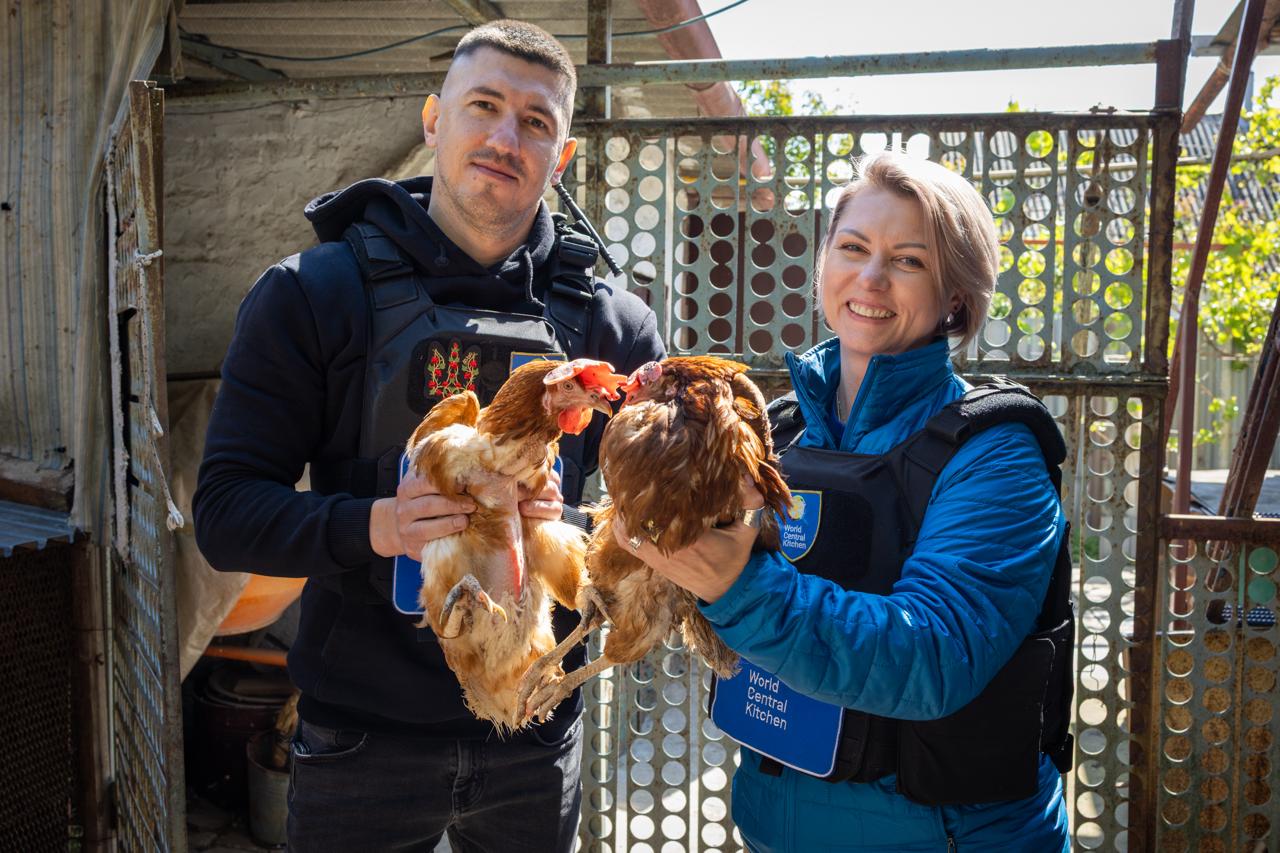
Self-reliance projects make it possible for communities to maintain stability even when disruption continues. That’s why we began implementing small-scale cooking solutions, expanding laying hen deliveries, and developing greenhouse and community field initiatives.
Olga, WCK Ukraine Country Lead
As the war continues, needs to fluctuate across regions. Emergency activation remains part of regular operations. What has evolved since 2022 is not the objective, but the system supporting it. Our mission continues to focus on ensuring reliable access to nourishing food despite unstable conditions, now through a structure built to function over the long term.
Support our work in Ukraine