How WCK Supports Communities on the Frontlines of Climate & Natural Disasters
Every year, the world marks Earth Day as a moment to reflect on the planet we share. But for millions of people living on the frontlines of climate change, that reflection is not abstract. It arrives as floodwater at the door, wildfire smoke on the horizon, or a hurricane bearing down on a community that has not yet recovered from the last one.
From Los Angeles to Türkiye, the disasters are getting worse. Nine of the ten years with the highest number of billion-dollar disasters have occurred in the past decade. Economic losses from natural disasters now exceed $2.3 trillion annually worldwide. And the pattern is accelerating—floods, wildfires, earthquakes, and extreme weather events are no longer isolated incidents. They are overlapping, intensifying, and arriving faster than communities can recover.
When they do, hunger follows.
The Gap Between Disaster and Recovery
In the aftermath of a disaster, the needs are immediate: shelter, safety, clean water, and food. But traditional disaster funding is often reactive, fragmented, and slow—designed to respond after the fact rather than before the next crisis hits. Communities are left waiting for resources to be allocated, approved, and deployed while families go without.
WCK’s disaster relief model is built to ensure families impacted by disaster have access to the nourishing meals and water they need, when and where they need them.
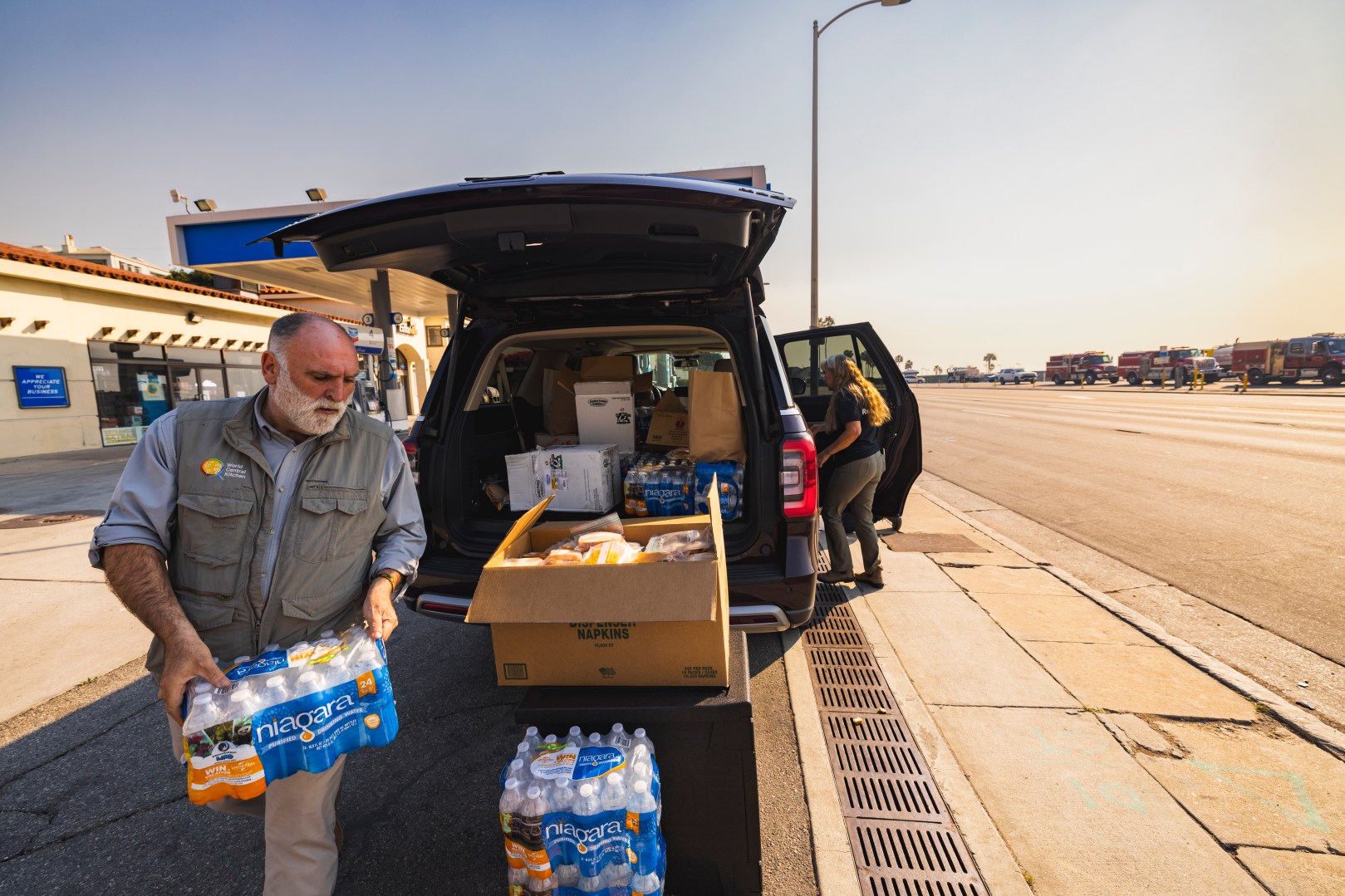
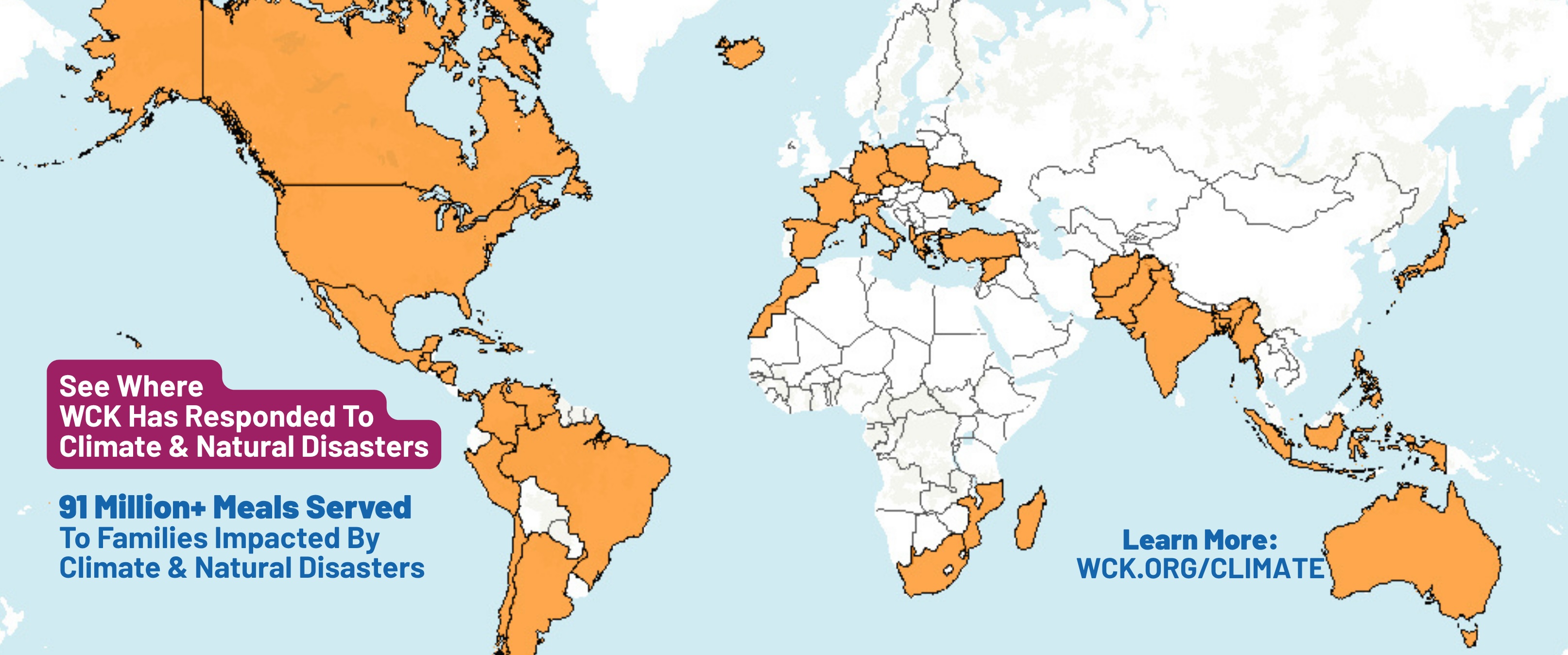
Founded in 2010 by Chef José Andrés, WCK has always operated with what we call the urgency of now. For forecasted disasters like hurricanes, we pre-position teams before landfall. For sudden events like earthquakes, wildfires, and volcanic eruptions, we aim to serve our first meals within 24 to 48 hours. Since our founding, WCK has served more than 600 million nourishing meals worldwide, including more than 91 million in response to climate and natural disasters.
Our teams are positioned across the world to be flexible and ready-to-deploy as soon as necessary.
How WCK Responds
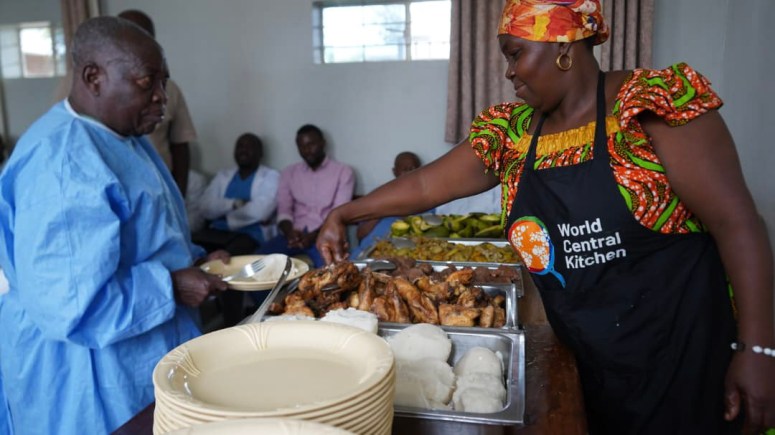
When WCK arrives in a disaster-affected community, we don’t build an independent operation from scratch. We partner with the people who were already there: local restaurants, food trucks, caterers, and community organizations who know the land, the culture, and the people.
We source ingredients locally whenever possible. We employ community members. We use whatever means of transport is available—trucks, boats, helicopters, planes—to reach families in isolated areas. The result is fresh, culturally appropriate food that does more than fill a plate. It signals to a community that they have not been forgotten.
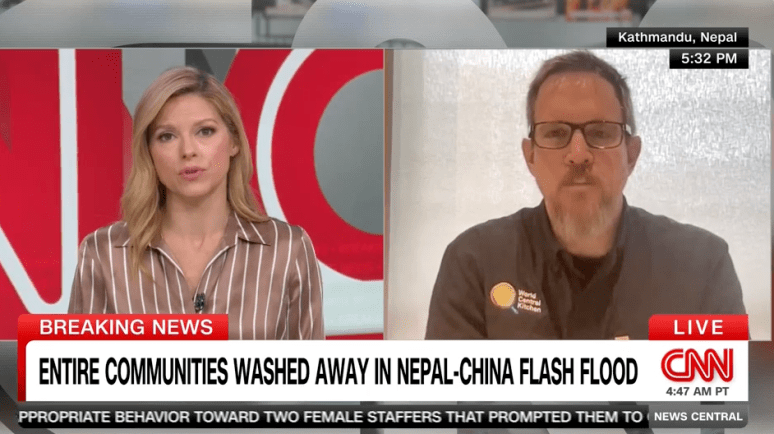
Over the past year alone, WCK teams have responded to flooding in Brazil and Hawaiʻi; an earthquake in Indonesia; a blizzard across the northeastern United States; a tornado in Illinois; and a cyclone in Madagascar.
Built for a Changing Climate
The disasters of the future will not look like the disasters of the past. Communities are increasingly facing multiple crises within a single season. Floods are followed by storms, wildfires compounded by drought. The overlap is becoming the norm.
WCK is preparing accordingly. We are pre-positioning equipment and supplies, expanding and training our response teams, and building long-term regional partnerships that allow us to scale rapidly across multiple geographies at once. We have built the infrastructure that sustains readiness so that when the next disaster strikes, we are already moving.
Preparedness is not optional. It is the work.
The Measure of This Moment
Behind every statistic about rising disaster frequency is a family that lost their home, a farmer whose crops were destroyed, a child eating their first warm meal after days without. The scale of the climate crisis is global. The response has to be human.
This Earth Day, WCK is asking a simple question: when communities lose everything, who shows up?
We will. With your support, we always will.
Help Us Keep Cooking For Families Impacted by Climate & Natural Disasters